AGP Executive Report
Last update: 2 days agoIn the last 12 hours, the most prominent health-related coverage centers on a hantavirus outbreak linked to a luxury cruise ship (MV Hondius), where reporting says three people died and additional cases are confirmed or suspected. Multiple articles focus on what hantavirus is, how it spreads (primarily via rodents and their droppings/urine, with airborne risk during cleaning), and the specific concern that the Andes strain—associated with Argentina/Chile—can be the only known variant capable of close, prolonged human-to-human transmission. Coverage also emphasizes that authorities are scrambling to track passengers and that some individuals are self-isolating as a precaution, while other pieces stress that the overall public-health threat may still be limited—though the situation is being treated cautiously.
Alongside the outbreak reporting, the last 12 hours include broader “what this could mean next” framing. Articles warn that the cruise incident may be part of a wider pattern: climate change and shifting rodent habitats could increase “spillover” risk for rodent-borne viruses into regions with little or no prior immunity. While these pieces are not specific to Bolivia, they are relevant to regional risk discussions because they describe South American arenaviruses (including viruses named as circulating in Bolivia) and project that risk could expand over the next 20–40 years.
Outside infectious disease, the most direct Bolivia-linked item in the recent window is immigration-related legal coverage: a U.S. court denied immediate release for José Yugar-Cruz, described as Bolivian, who is detained after an order for removal to the Democratic Republic of the Congo. The article frames this within broader deportation policy and the risk of being sent to a third country, rather than a health-system story—but it is the clearest Bolivia-specific “health-adjacent” development in the provided material.
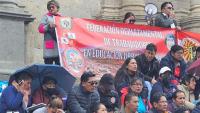
For continuity/background from earlier in the week, there is additional context on rodent-borne virus risk and climate-driven spread (including an “early warning map” approach and an open-source platform described as AtlasArena), plus a separate thread on Bolivia-related social tensions where bishops call for dialogue amid protests tied to inflation, currency shortages, and fuel supply problems. However, the evidence in the older articles is more about risk framing and societal context than about new, Bolivia-specific healthcare interventions.
Overall, the news cycle in this 7-day window is dominated by hantavirus outbreak explainers and response updates, with a secondary emphasis on future spillover risk under climate change. Bolivia appears mainly through named arenaviruses in regional risk discussions and through immigration/legal coverage involving a Bolivian detainee; the provided evidence does not show a specific, immediate Bolivia healthcare policy change in the last 12 hours.
Note: AI-generated summary based on news headlines, with neutral sources weighted more heavily to reduce bias.